A swimsuit is an item of clothing designed to be worn by people engaging in a water-based activity or water sportssuch as swimmingdiving and surfingor sun-orientated activities, such as sun bathing.
Different types may be worn by men, women, and children. A swimsuit can be described by various names, some of which are used only in particular locations, including swimwearbathing suitswimming costumebathing costumeswimming suitswimmersswimming togsbatherscossie short for “costume”or swimming trunks for men, besides others.
A swimsuit can be worn as an undergarment in sports that require a wetsuit such as water skiingscuba divingsurfingand wakeboarding.
Early examples were not very different from the women’s two pieces common since the s, except that they had a gap below the breast line allowing for a section of bare midriff. Although trunks have been used as swimwear since the s, their heyday was in the s when they were highly popularized thanks in part to TV shows like Baywatch. Women swimwear 1985 fashion for women They were initially made of cotton and became virtually transparent when wet. New York: The Century Company.
Swimsuits may also be worn to display the wearer’s physical attributesas in the case of beauty pageants or bodybuilding contests, and glamour photography and magazines like the annual Sports Illustrated Swimsuit Issue featuring models and sports personalities in swimsuits.
There is a very wide range of styles of modern swimsuits available, which vary as to body coverage and materials. The choice of style may depend on community standards of modestyas well as current fashionsand personal preferences.
The choice will also consider the occasion, for example whether it is to be worn for a passive occasion such as sunbathing or for an activity such as surfing or swimsuit competition.
Swimwear for men usually exposes the chest, while suits for women usually cover at least the breasts. Rayon was used in the s in the manufacture of tight-fitting swimsuits, [1] but its durability, especially when wet, proved problematic, [2] with jersey and silk also sometimes being used.
Sexy beautiful women
In the s, new materials were being developed and use in swimwear, particularly latex and nylonand swimsuits gradually began hugging the body, [4] especially women’s swimsuits.
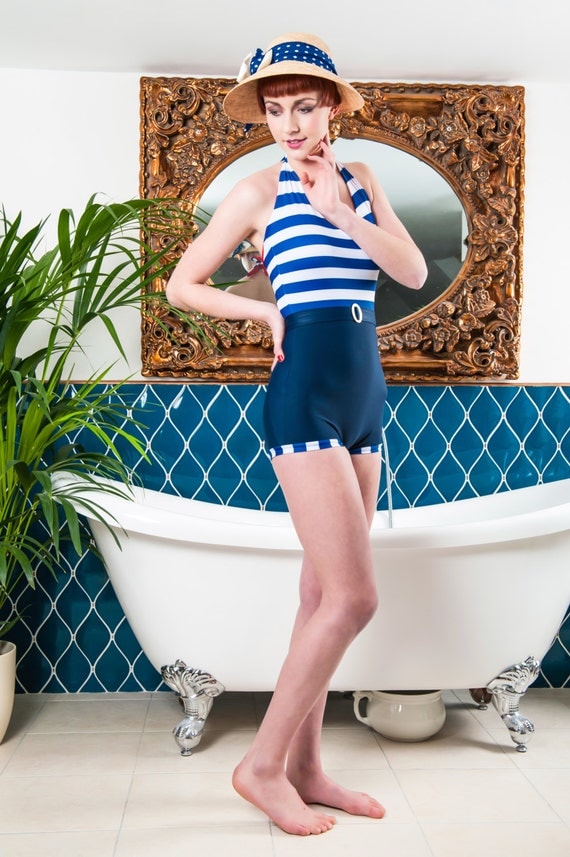
In Western culture, men’s swimsuit styles include boardshortsjammersswim trunksbriefsor ” speedos “, thongsand g-stringsin order of decreasing lower body coverage, and women’s swimsuits include one-piecebikinisor thongs.
By the second half of the 19th century, in France, the sleeves started to vanish, the bottom became shorter to reach only the knees and the top became hip-length and both became more form fitting. Women’s Bikinis Two-Piece Swimsuits discounts on the best women’s two-piece swimwear Rayon was used in the s in the manufacture of tight-fitting swimsuits, [7] but its durability, especially when wet, proved problematic, [17] with jersey and silk also sometimes being used.
While they go through many trends in pattern, length, and cut, there is not much modification to the original variety of suit.
A recent innovation is the burqinifavored by some Muslim women, which covers the whole body and head but not face in a manner similar to a diver’s wetsuit.
These are an updated version of full-body swimwear, which has been available for centuriesbut conforms with Islam ‘s traditional emphasis on modest dress.
In Egyptthe term ” Sharia swimsuit” is used to describe full-body swimwear. In other cultures particularly the UKthe term “trunks” is used to describe swim briefs, although it has been increasingly common for any men’s swimwear to be generically described as “trunks”.
Swimsuits can be skin-tight or loose-fitting.

They are often lined with another layer of fabric if the outer fabric becomes transparent when wet. Swimsuits range from designs that almost completely cover the body to designs that expose almost all of the body.
Women swimwear 1985 fashion for women light blue
The choice of swimsuit will depend on personal and community standards of modesty and on considerations such as how much or how little sun protection is desired, and prevailing fashions.
Almost all swimsuits cover the genitals and pubic hairwhile most except thongs or G-string cover much or all of the buttocks. Most swimsuits in western culture leave at least the head, shoulders, arms, and lower part of the leg below the knee exposed.
Women’s swimsuits generally cover at least the areola and bottom half of the breasts. Both men and women may sometimes wear swimsuits covering more of the body when swimming in cold water see also wetsuit and dry suit.
Jinjiang Hongxing Fashion Weaving Co., Ltd. – Swimwear, Yoga Cloth
In colder temperatures, the swimwear is needed to conserve body heat and protect the body core from hypothermia.
Competitive swimwear refers to the swimsuitclothing, equipment and accessories used in the aquatic sports of swimmingdivingsynchronized swimmingtriathlon and water polo.
Some swimsuits are designed specifically for swimming competitions where they may be constructed of a special low resistance fabric that reduces skin drag.
For some kinds of swimming and diving, special bodysuits called “diveskins” are worn. These suits are made from spandex and provide little thermal protection, but they do protect the skin from stings and abrasion.
Most competitive swimmers also wear special swimsuits including partial bodysuitsracerback styles, jammers and racing briefs to assist their glide through the water thus gaining a speed advantage.
10.01.2020 – Starting around , in an effort to improve the effectiveness of the swimsuits, engineers have taken to designing them to replicate the skin of sea-based animals, sharks in particular. There were very many different designers who were successful in their own way. Ultraviolet Press. Annette Kellerman ‘a form-fitting one-piece tank suit inspired the women’s swimwear in the early Olympics New York sportswear designers were widely praised for the contemporary approach to fashion.
Unlike regular swimsuits, which are designed mainly for the aesthetic appearances, swimsuits designed to be worn during competitions are manufactured to assist the athlete in swim competitions.
They reduce friction and drag in the water, increasing the efficiency of the swimmer’s forward motion. The tight fits allow for easy movement and are said to reduce muscle vibration, [7] thus reducing drag.

This also reduces the possibility that a high forwards dive will remove a divers swimwear. Starting aroundin an effort to improve the effectiveness of the swimsuits, engineers have taken to designing them to replicate the skin of sea-based animals, sharks in particular.
The new policy was implemented to combat the issues associated with performance enhancing swimsuits, hindering the ability to accurately measure the performance of swimmers.
Some swimmers use a specialized training suit called drag suits to artificially increase drag during practice. Drag suits are swimwear with an outer layer of looser fabric — often mesh or nylon — to increase resistance against the water and build up the swimmer’s endurance.

They come in a variety of styles, but most resemble a looser fitting square-cut or swim brief. Germs, bacteria, and mold can grow very quickly on wet bathing suits.
Medical professionals warn that wearing damp swimwear for long periods of time can cause a number of infections and rashes in children and adults, and warn against sharing bathing suits with others.
In public swimming pools in France for reasons of hygiene, it is only permitted to wear closer fitting styles of swimwear.
Men, for instance, must wear “Speedo”-style bathing suits and not baggy shorts or trunks. In classical antiquity swimming and bathing were done naked.
There are Roman murals which show women playing sports and exercising wearing two-piece suits covering the areas around their breasts and hips in a fashion remarkably similar to the present-day bikini.
However, there is no evidence that they were used for swimming. All classical pictures of swimming show nude swimmers.
In various cultural traditions one swims, if not in the nude, in a version in suitable material of a garment or undergarment commonly worn on land, e.
In the United Kingdom until the midth century there was no law against nude swimmingand each town was free to make its own laws.
For example, the Bath Corporation official bathing dress code of prescribed, for men:. It is Ordered Established and Decreed by this Corporation that no Male person above the age of ten years shall at any time hereafter go into any Bath or Baths within this City by day or by night without a Pair of Drawers and a Waistcoat on their bodies.
In rivers, lakes, streams and the sea men swam in the nude, where the practice was common. Those who didn’t swim in the nude, stripped to their underwear.
The English practice of men swimming in the nude was banned in the United Kingdom in Even then there were many who protested against them and wanted to remain in the nude.
Women swimwear 1985 fashion for women street
Francis Kilvert described men’s bathing suits coming into use in the s as “a pair of very short red and white striped drawers”. Female bathing costumes were derived from those worn at Bath and other spas.
It would appear that until the s nude female bathing in the spas was the norm and that after that time women bathed clothed.
Celia Fiennes gave a detailed description of the standard ladies’ bathing costume in The Gentlemen have drawers and wastcoates of the same sort of canvas, this is the best linning, for the bath water will Change any other yellow.
“Special Beachwear Blumarine” Spring Summer 1985 Milan Pret a Porter Woman by Canale Moda
No Female person shall at any time hereafter go into a Bath or Baths within this City by day or by night without a decent Shift on their bodies.
The ladies wear jackets and petticoats of brown linen, with chip hats, in which they fix their handkerchiefs to wipe the sweat from their faces; but, truly, whether it is owing to the steam that surrounds them, or the heat of the water, or the nature of the dress, or to all these causes together, they look so flushed, and so frightful, that I always turn my eyes another way.
The only difference is in the fabric the costumes are made of. Flannel, however, was a common fabric for sea bathing costumes as many believed the warmer fabric was necessary in cold water.
In the 18th century women wore “bathing gowns” in the water; these were long dresses of fabrics that would not become transparent when wet, with weights sewn into the hems so that they would not rise up in the water.
The men’s swim suit, a rather form-fitting wool garment with long sleeves and legs similar to long underwearwas developed and would change little for a century.
Brands women swimwear 1985 fashion for women maxi
In the 19th century, the woman’s double suit was common, comprising a gown from shoulder to knees plus a set of trousers with leggings going down to the ankles.
In the Victorian erapopular beach resorts were commonly equipped with bathing machines designed to avoid the exposure of people in swimsuits, especially to people of the opposite sex.

In the United States, beauty pageants of women in bathing costumes became popular from the s. However, such events were not regarded as respectable.

Beauty contests became more respectable with the first modern ” Miss America ” contest held inthough less respectable beauty contests continued to be held.
Inthe swimmer Annette Kellerman from Australia visited the United States as an “underwater ballerina”, a version of synchronized swimming involving diving into glass tanks.

She was arrested for indecent exposure because her swimsuit showed arms, legs and the neck. Kellerman changed the suit to have long arms and legs and a collar, still keeping the close fit that revealed the shapes underneath.
She later starred in several moviesincluding one about her life. She marketed a line of bathing suits and her style of one-piece suits came to be known as “the Annette Kellerman”.
The Annette Kellerman was considered the most offensive style of swimsuit in the s and became the focus of censorship efforts.
Women swimwear 1985 fashion for women shopping centre
Despite opposition from some groups, the form-fitting style proved popular. It was not long before swimwear started to shrink further. At first arms were exposed and then legs up to mid-thigh.
Necklines receded from around the neck down to around the top of the bosom.

The development of new fabrics allowed for new varieties of more comfortable and practical swimwear. Annette Kellerman in her one-piece bathing suit.
Due to the figure-hugging nature of these garments, glamour photography since the s and s has often featured people wearing swimsuits.
This type of glamour photography eventually evolved into swimsuit photography exemplified by the annual Sports Illustrated Swimsuit Issue.
Beauty contests also required contestants to wear form-fitting swimsuits.

The first bikinis appeared just after World War II. Early examples were not very different from the women’s two pieces common since the s, except that they had a gap below the breast line allowing for a section of bare midriff.

They were named after Bikini Atollthe site of several nuclear weapons tests, for their supposed explosive effect on the viewer.
Through the s, it was thought proper for the lower part of the bikini to come up high enough to cover the navel. From the s on, the bikini shrank in all directions until it sometimes covered little more than the nipples and genitalia, although less revealing models giving more support to the breasts remained popular.
At the same time, fashion designer Rudi Gernreich introduced the monokinia topless suit for women consisting of a modest bottom supported by two thin straps.
Although not a commercial success, the suit opened eyes to new design possibilities. In the s the thong or “tanga” came out of Brazilsaid to have been inspired by traditional garments of native tribes in the Amazon.
The decrease in the cost of clothing manufacturing meant that there were more t-shirt designs available than ever before. Women swimwear 1985 fashion for women Retrieved August 29,
However, the one-piece suit continued to be popular for its more modest approach. Men’s swimsuits developed roughly in parallel to women’s during this period, with the shorts covering progressively less.
Eventually racing-style “speedo” suits became popular—and not just for their speed advantages. ThongsG-stringsand bikini style suits are also worn.
 Women's Bikinis Two-Piece Swimsuits discounts on the best women's two-piece swimwear